Unlocking Industry Success: The Ultimate Guide to Stationary Crushing Plant Technologies and Applications
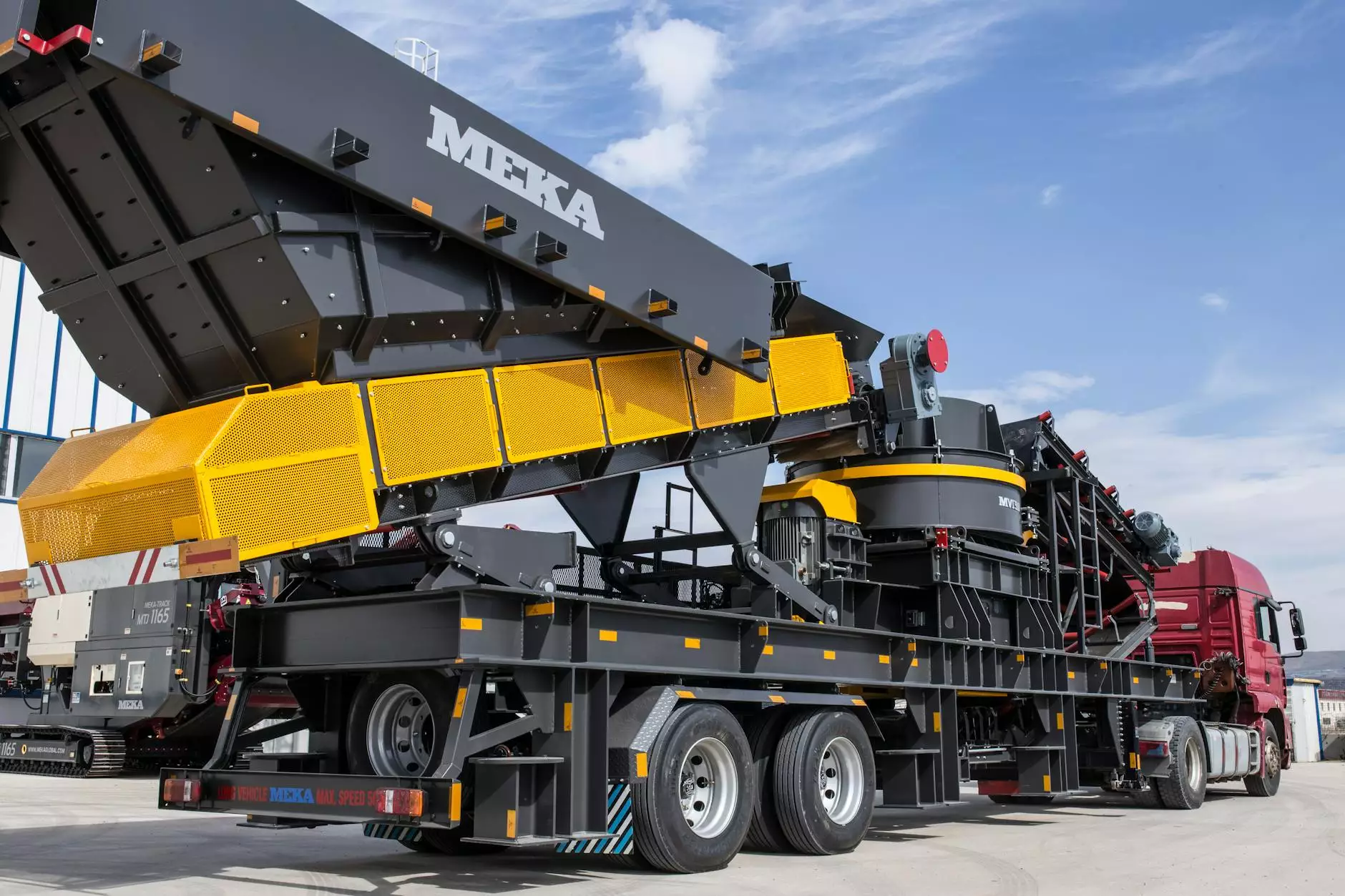
In the competitive landscape of modern construction, mining, and aggregate processing industries, the importance of efficient, reliable, and high-capacity crushing solutions cannot be overstated. Among these, the stationary crushing plant stands out as a pivotal equipment that combines durability, efficiency, and scalability. When designed and deployed correctly, a stationary crushing plant can revolutionize material processing workflows, leading to substantial cost savings, increased productivity, and superior end-product quality. This comprehensive guide explores the many facets of stationary crushing plants, their advantages, key components, technological innovations, and strategic deployment considerations—empowering industry professionals to make informed decisions that propel their operations to new heights.
Understanding the Stationary Crushing Plant: An Industry Cornerstone
A stationary crushing plant is a fixed, industrial-scale equipment setup dedicated to breaking down large bulk materials such as rocks, ores, minerals, and construction debris into manageable sizes. Unlike mobile crushing units, stationary plants are permanently installed in designated production facilities, offering unmatched stability and processing capacity.
Core Components of a Stationary Crushing Plant
- Feeding System: Feeder conveyors and hopper systems that regulate material flow into the crusher.
- Primary Crusher: Usually jaw crushers or gyratory crushers that handle the initial size reduction.
- Secondary & Tertiary Crushers: Cone crushers, impact crushers, or vertical shaft impactors (VSI) that refine material to desired sizes.
- Screening Equipment: Vibrating screens or rotary screens ensure size classification and separation of undesired fractions.
- Conveyor Systems: Series of belts transporting materials between process stages efficiently.
- Control Systems: Advanced automation solutions for monitoring, controlling, and optimizing operations.
Why Opt for a Stationary Crushing Plant? Key Benefits Explored
The decision to deploy a stationary crushing plant stems from the need for high-capacity, consistent, and long-term material processing solutions. Key advantages include:
1. Superior Durability and Longevity
Manufactured with robust materials and engineering precision, stationary plants are built to withstand harsh operational conditions. Their fixed nature allows for reinforced infrastructure, ensuring minimal downtime and extended service life, thereby reducing total cost of ownership.
2. Higher Processing Capacity
Stationary systems are capable of handling large throughput volumes, often exceeding mobile solutions. This scalability is critical for large-scale projects involving quarrying, mining, or large construction developments.
3. Superior Product Quality & Consistency
With steady operational parameters and dedicated control systems, stationary plants produce uniformly sized aggregates and minerals, meeting strict industry standards such as ASTM, EN, and other regional specifications.
4. Enhanced Operational Stability
Fixed installation ensures minimal variability due to terrain or movement, enabling precise process control, safety, and ease of maintenance—vital for continuous production environments.
5. Cost-Effective Over Long Term
While initial investment might be higher than mobile systems, the leveraging of economies of scale, lower operational costs per unit output, and minimal operational disruptions make stationary plants more economical in the long run.
Innovating with Stationary Crushing Plant: Cutting-Edge Technologies
Modern stationary crushing plants integrate innovative technologies that drastically improve efficiency, environmental sustainability, and operational ease. These include:
1. Automation and Control Systems
Smart automation tools enable real-time monitoring, predictive maintenance, and process optimization. Advanced PLC (Programmable Logic Controller) systems facilitate seamless control and data analytics, reducing downtime and enhancing productivity.
2. Environmental Compliance & Sustainability
Environmental considerations are embedded into design through dust suppression systems, noise reduction mechanisms, and energy-efficient motors. These features help companies adhere to stringent regulations and promote sustainable operations.
3. Modular Design & Scalability
Many modern stationary plants are designed with modular components, allowing for phased upgrades, easy expansions, and customization based on specific project requirements.
4. Energy Efficiency & Eco-Friendly Solutions
Implementation of variable frequency drives (VFDs), recuperation systems, and energy-efficient motors significantly reduce energy consumption and carbon footprint.
Design & Installation Considerations for a Stationary Crushing Plant
Choosing the right configuration and ensuring optimal installation are critical for achieving desired performance outcomes. Several factors influence design choices:
- Material Characteristics: Hardness, abrasiveness, moisture content, and feed size.
- Production Capacity Needs: Expected throughput volumes and future scalability plans.
- Site Conditions: Terrain stability, space availability, and environmental constraints.
- Budget and Investment Outlook: Capital expenditure and long-term operational costs.
- Regulatory Compliance: Noise, dust, and environmental standards to adhere to local laws.
Expert consultation and comprehensive feasibility analysis are vital during planning to tailor the plant’s design to specific needs, ensuring optimal performance and compliance.
Operational Strategies for Maximizing a Stationary Crushing Plant's Potential
Once installed, consistent and strategic operation enhances return on investment. Effective practices include:
- Regular Maintenance & Inspection: Preventative maintenance schedules keep equipment in top condition, preventing costly breakdowns.
- Automation & Data Monitoring: Continuous monitoring of key parameters such as crusher load, temperature, and throughput enables proactive adjustments.
- Material Handling Optimization: Proper feeding techniques prevent blockages and uneven wear.
- Training & Skilled Workforce: Well-trained operators maximize efficiency and safety.
- Environmental Management: Dust suppression, noise control, and waste management strategies ensure compliance and community goodwill.
Case Studies & Success Stories
Leading companies worldwide report significant gains through the deployment of tailored stationary crushing plants. For example, a major quarry operator in North America increased their processing capacity by 40% after upgrading to a modern, automation-enabled stationary plant from polygonmach.com. Similarly, a large-scale mining operation in Africa achieved a 25% reduction in operational costs by optimizing their existing stationary crushing infrastructure.
Conclusion: Embrace the Future of Material Processing with a Stationary Crushing Plant
Investing in a stationary crushing plant represents a strategic decision that aligns with industrial growth, environmental responsibility, and economic efficiency. As technology continues to evolve, stationary systems will become even more sophisticated—integrating AI, IoT, and smart materials handling—to meet the ever-growing demands of modern industry.
For organizations serious about enhancing their material processing operations, partnering with experienced manufacturers like polygonmach.com ensures access to cutting-edge solutions, tailored designs, and comprehensive support. The future of robust, efficient, and sustainable crushing technology is stationary, and it is here to transform how industries process materials, reduce costs, and improve end-product quality.